
Features
Categories and rates.
Reuse service categories, set selling and work-cost rates, and apply agreed rates and billing rules for projects and people.
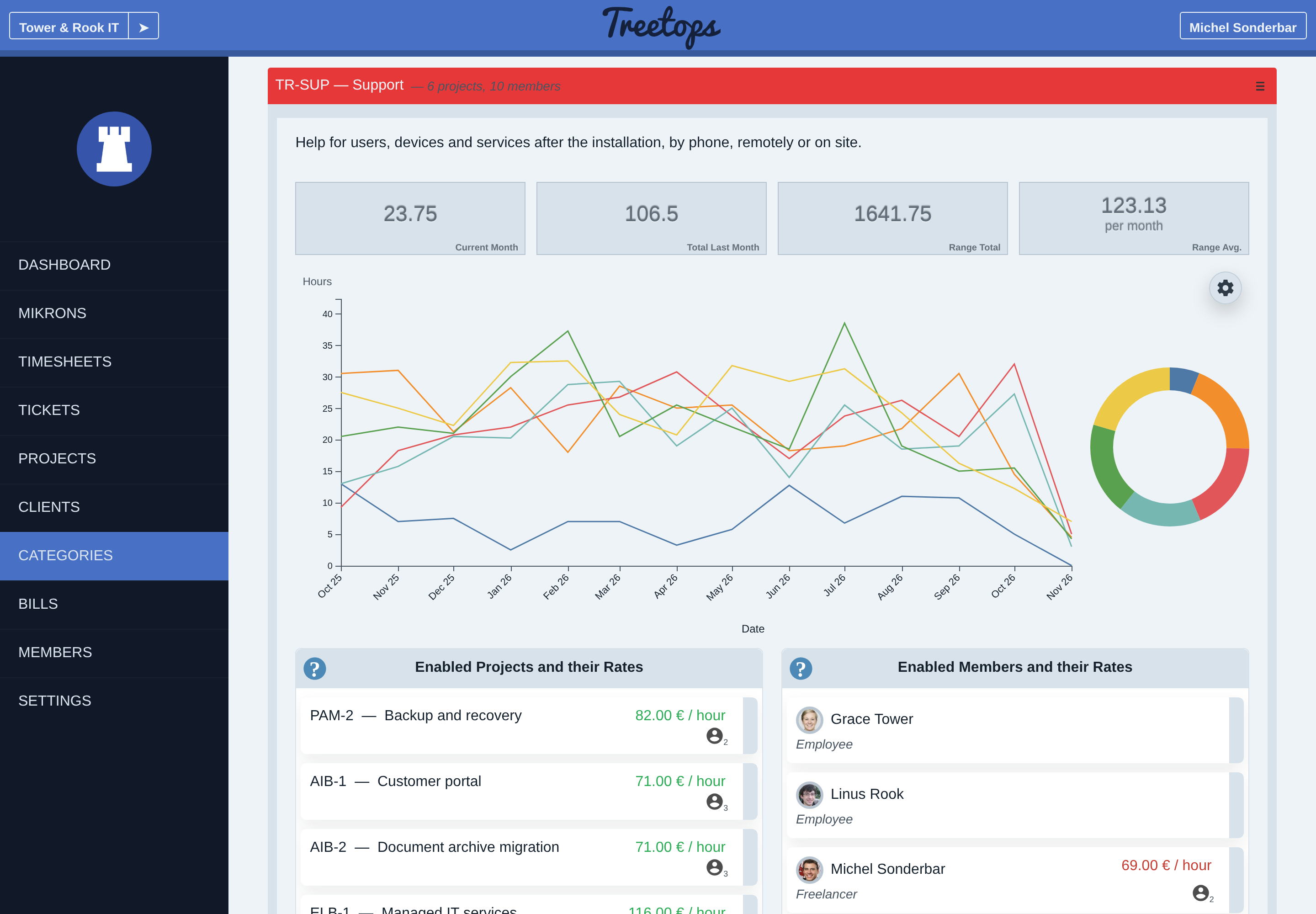
Service categories
A category describes a kind of work and can be reused across projects. A task is a project work package containing tickets, with its own assignment and progress.
Project settings control which categories are available.
Selling rates and work costs
A selling rate values work for client billing. A work-cost rate values the cost of a person’s work. Categories provide defaults for both.
Project/category agreements can replace selling defaults. Member/category and project/member/category agreements can replace work-cost defaults. A positive effective salary cost takes precedence over member-rate fallbacks.
Entering zero sets a rate to zero. Clearing an override restores the applicable default. Freelancers with own-rate permission can maintain their assigned rates without gaining access to colleagues’ rates.
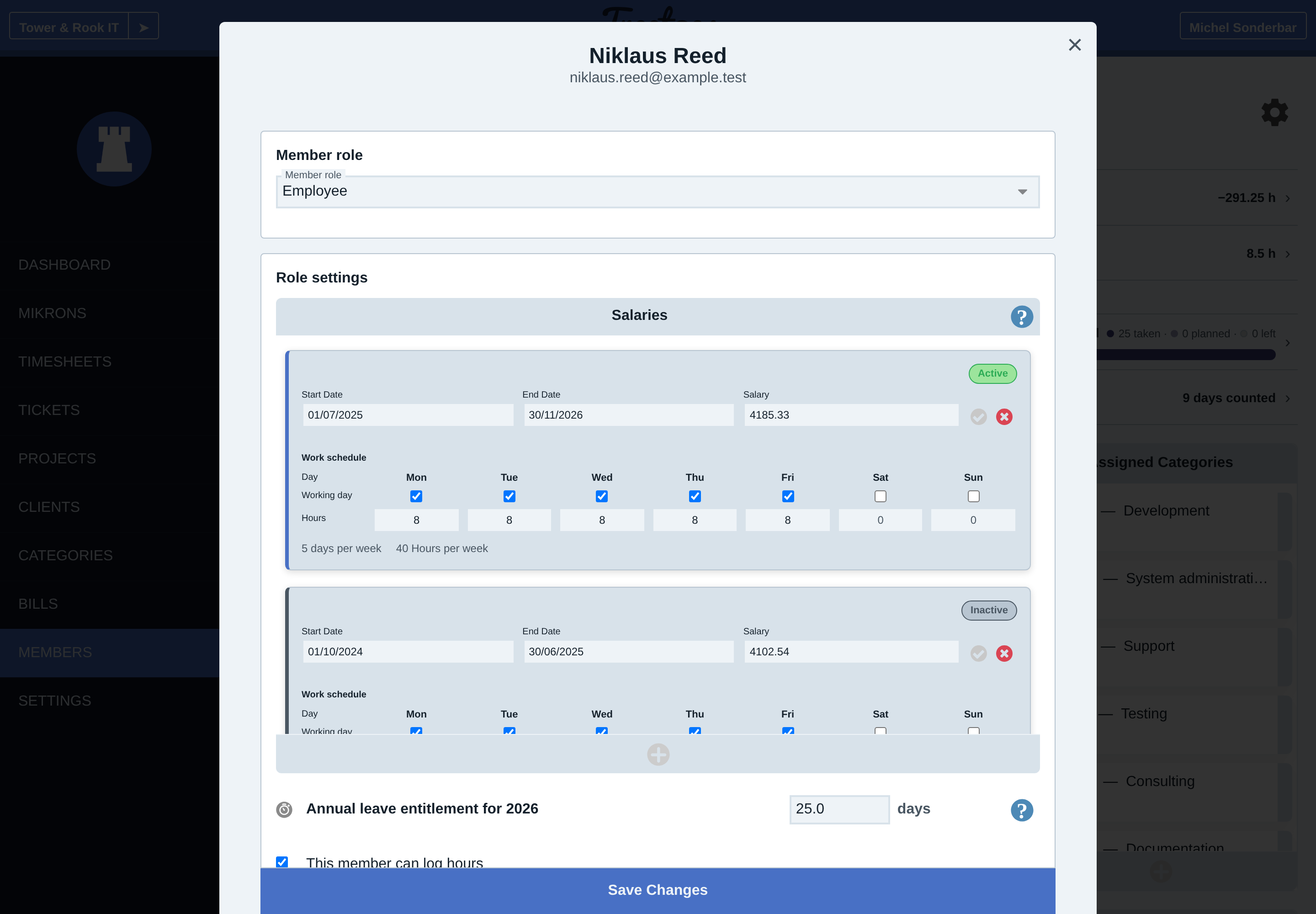
Employee salary terms and work schedules
Salary terms define effective dates and can include an employee’s salary cost. A work schedule sets expected hours for each weekday. Schedules can be maintained before salary amounts are known.
The time and leave guide explains dated schedules and their effect on reporting.
Billability and VAT
Billability controls whether work is available for personal invoices, organization invoices, both or neither. Personal invoices bill a freelancer’s work to the organization. Organization invoices bill the client.
Both project and category settings apply. Work also needs the required review and must not already be claimed at that billing layer.
A category can use a selected VAT rate or inherit the organization default.
Guides