
Features
Time recording and review.
Record time in a form or calendar, inspect saved timesheets, review work and export records as CSV.
Time records
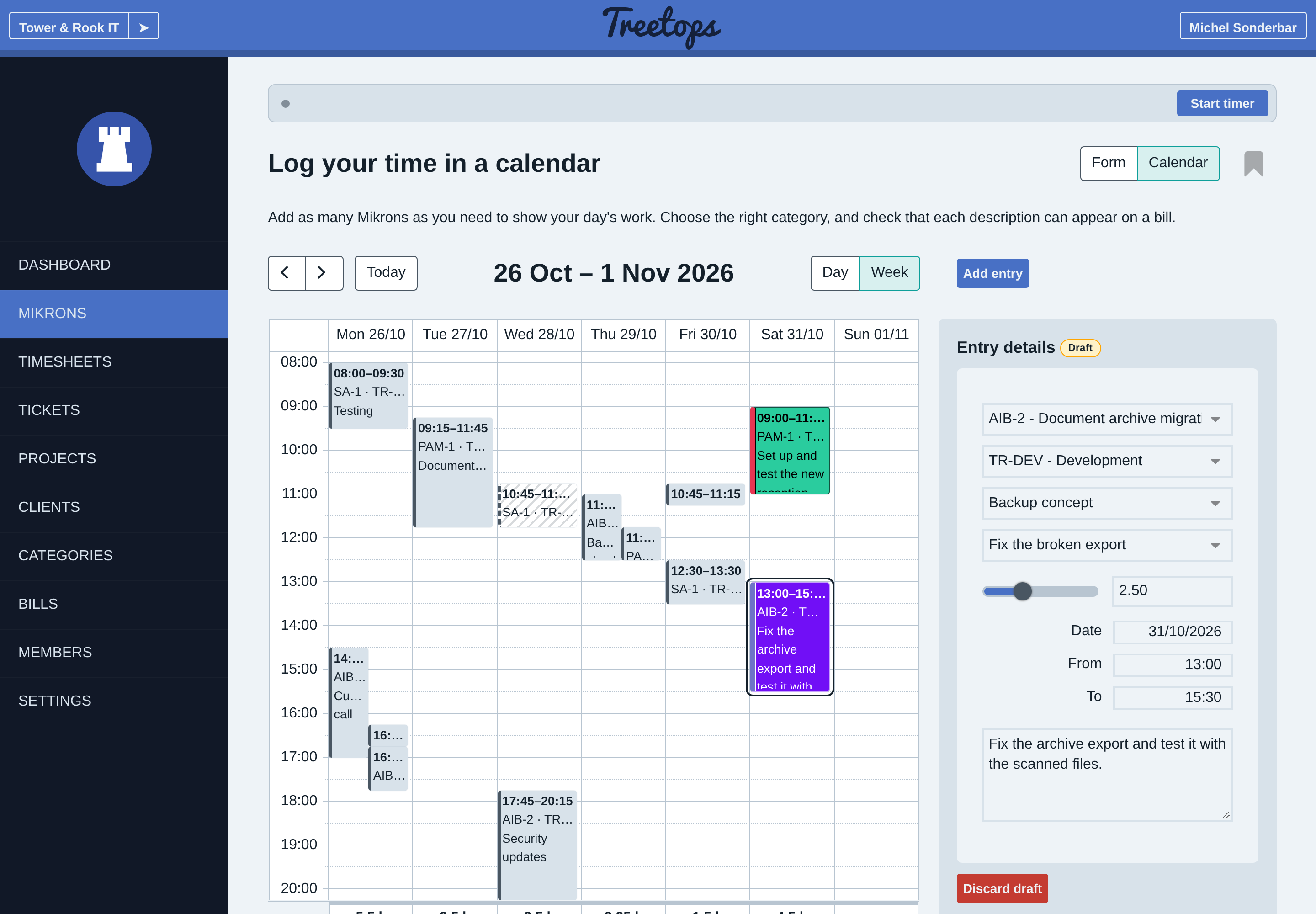
A Mikron records who worked, the project, category, start and end time. A category describes the kind of work. Records can also refer to a task or ticket.
Type entries in a form or draw them in a day or week calendar. Both share the same drafts: entries that have not been saved.
Drafts stay in one browser and organization, including after logout. Resume, save or clear them there.
Templates and timers
A Mikron template reuses entry details, including optional duration and task or ticket. It prepares new work and is separate from an invoice layout.
One timer runs in the browser at a time. Stop it, check the draft, then save. Stopping rounds the end and an unchanged start to five minutes.
Daily and weekly summaries compare saved work plus drafts with scheduled hours. A project-colour bar separates saved and unsaved portions. Leave does not count as worked time here.
Records can cross midnight and last at most 24 hours. One person’s records cannot overlap in the same project. Records in different projects can overlap and count in full.
Timesheets
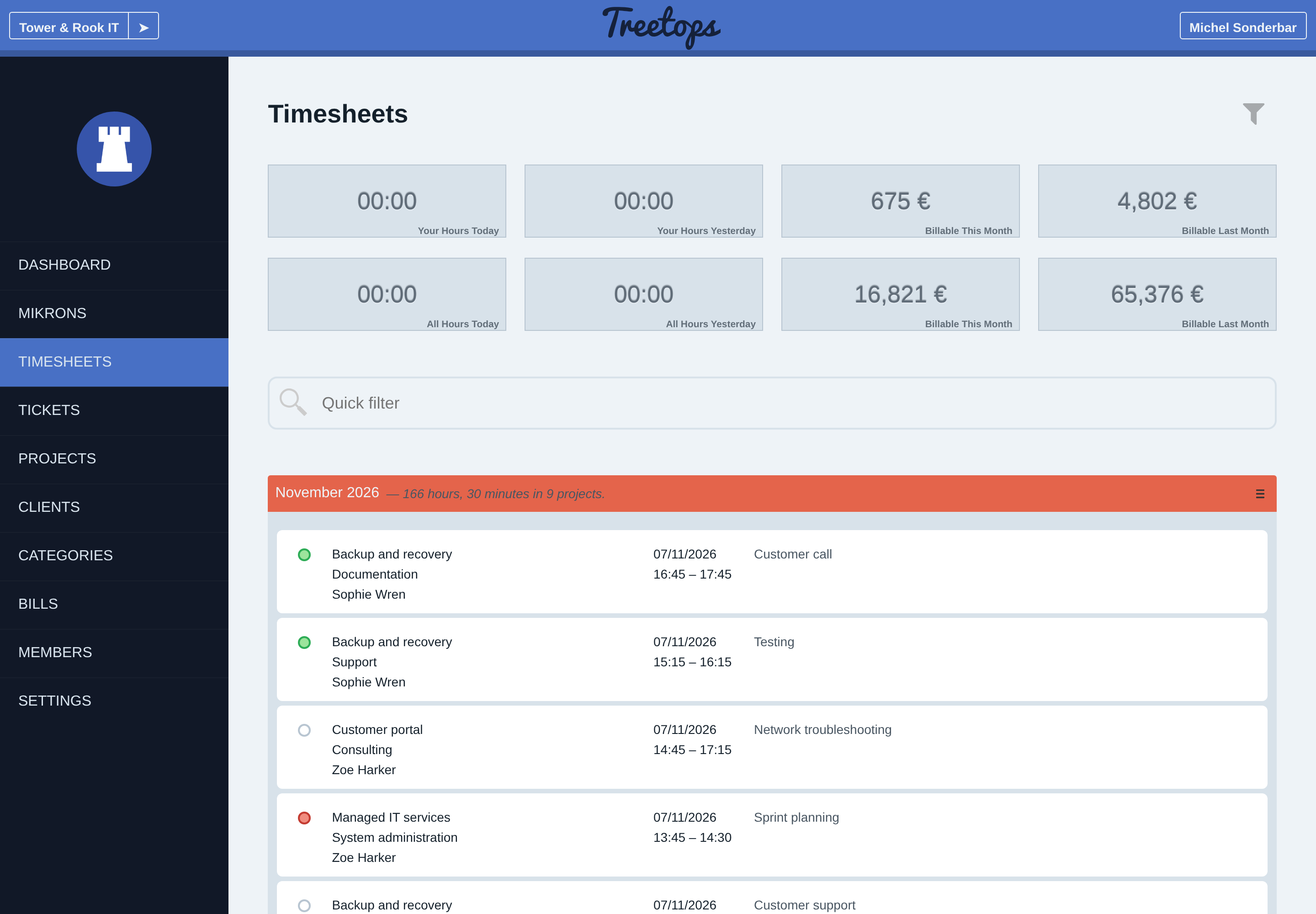
Timesheets collect saved records by month, separately from the entry calendar. Filter by person, project or dates, or search text. Saved filters retain selections; explicit links can select different filters.
Detail tables break hours down by member, project or category. CSV export includes saved records, their details and review state for use in a spreadsheet.
Review and forwarding
Authorized reviewers accept, reject or reset eligible work individually or in bulk. Filters limit the matching records. Permissions and processing state restrict available actions.
Forwarding passes locally reviewed work to a partner organization. The host keeps its own review and billing state, including when automatic review or forwarding is configured.
Invoice claims protect work against editing and deletion, including claims along a partnership. Ending a shared relationship can retain historical copies under the applicable rules. These copies are not new work.
Guides